This is Why You Need Engagement Campaigns on Facebook and Google
On the surface, Facebook engagement campaigns may seem unnecessary. But, they address an important part of the modern buying journey.
At Marketing 360® we work with a lot of small businesses that don’t really think of themselves as “brands.” They’re not trying to become the next Red Bull or Apple.
Often for these businesses, the idea of creating a brand awareness campaign seems frivolous. They just want to get their offer in front of serious buyers and let sales take its course.
What they don’t realize is that most often, customers are on a shopping journey that precedes spending money. Online consumers are methodical, yet emotional. They want to trust you and feel your product is a fit for how they view their lifestyle.
This early part of the journey is about engaging audiences and, basically, getting them to know you exist and then remember you. A significant part of most marketing strategies today is not unlike a billboard. You just want to get your name in front of people.
Build audiences
You might think that still sounds like fluff; like a lot of effort (and expense) that won’t drive revenue.
But, there is also an important tactical component to engagement campaigns, which is audience building.
You see, on platforms like Facebook and Google, when people interact with your content (for example, react to a post or visit a website page) this activity is tracked. They’re added to an audience list that you can retarget with new content.
The point is that when someone watches part of a video, clicks through to your website or shares a social post, they’re demonstrating interest. Now you’ve tapped into their buying journey so you can scale your campaigns to move them towards your transaction goal.
Here’s how Facebook breaks this down:
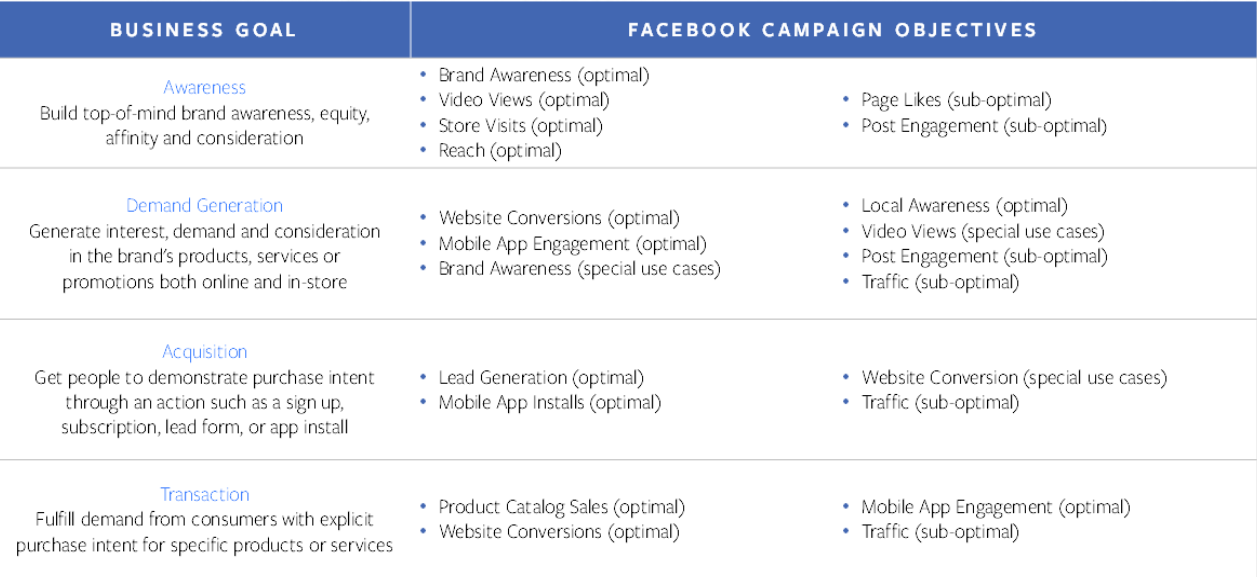
Engagement custom audiences retarget people who’ve already engaged with your content. You can then use the highest performing of these audiences as seeds for lookalike audiences.
Demand generation, acquisition, and transaction campaigns will mainly target engagement custom audiences or lookalike audience lists.
A lookalike audience is built by the algorithm. It uses the seed audience to create a new audience with shared characteristics. So if you have an audience of people who converted on your website, you can now target similar people (who are more likely to buy) in a new audience.
Or you can create a retargeting list for search ads (RSLA) where you bid much higher to rank for someone doing a search subsequent to having visited your website.
Engagement advertising
It’s impossible to overstate how important engagement tactics are in today’s search and social media marketing.
First, engagement tactics apply empathy to your advertising. You know people today aren’t going to act the first time they’re exposed to your brand because they’re inundated with content, information and options.
They’re empowered by the ability to search and connect online. Engagement campaigns that serve as an introduction to your business acknowledge this reality (instead of trying to force a sales pitch on someone who doesn’t trust you yet).
Also, beyond creating targeted audience lists, engagement content biases people toward your brand name. In fact, a significant KPI for engagement campaigns is an increase in brand name searches and direct website traffic.
Facebook Ads funnel example
Here’s an example of ads sequenced to take people from engagement to transaction.
They start with an interest-targeted ad that introduces their brand and one of their products. This ad is strictly targeting a new audience of women in the US ages 25-44 with interests in ethical consumerism and health & wellness products.

They can target actions such as video views, reactions or website clicks to create different audience sets.
Next, they retarget with further demand generation:
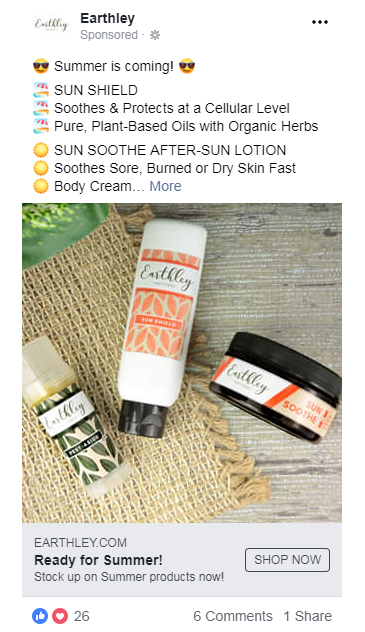
Now that these audiences know their brand, they build social proof with a testimonial post:
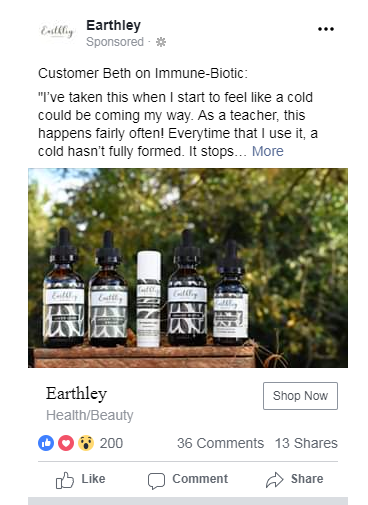
Throughout this process, they’re gaining post engagement and website visits that build their audience lists. Now they can create specific retargeting lists. For example, they created a list of people who abandon their cart so they can run ads like this:
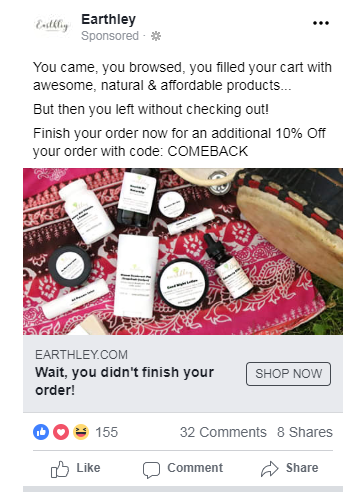
This ad results in the most website purchases because it’s targeting people who have demonstrated the highest level of purchase intent.
It all starts with engagement ads that target people based on interests, then scales the campaigns as they move through the buying cycle.
Originally published on 4/6/19