How to Increase the Average Transaction Value for Your Online Store
A shopper who’s ready to buy one item from you is likely to buy more, particularly if you entice them with a great deal.
9 tips to help you increase your average transaction value
#1. Cross-sell with recommendations
One step every e-commerce site needs to take is to have a product recommendation or a “You might also like” section that automatically cross-sells for you.
Like many e-commerce standards, this was popularized by Amazon. They add a nice touch of social proof by using the “Customers who viewed this item also viewed” header:

This feed recommends similar products to the ones being viewed but also cross-sells by showing products other shoppers were interested in. They further cross-sell with this section:
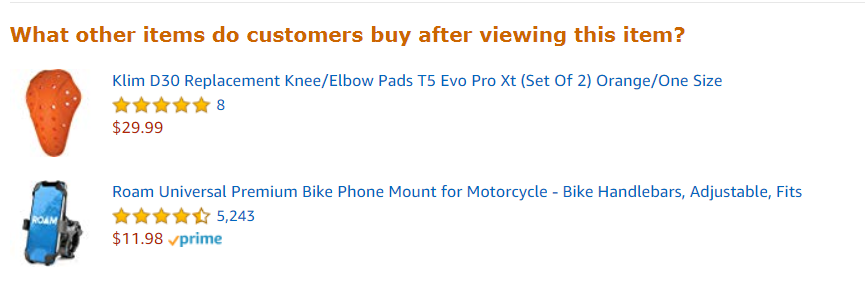
Amazon is the master at getting maximum transaction value from online shoppers. Use your e-commerce functionality to implement similar practices.
#2. Email automation
Email automation is a must for e-commerce.
When you make a sale, you’ll get the customer’s email. This puts them on your email list where you can follow up with new deals.
As an online shopper, my inbox flows with offers from e-commerce websites:

I expect to get these emails and generally welcome them. When the deals are of interest, I return to the site to buy more.
You can also capture the email of shoppers who visit your site with a popup:
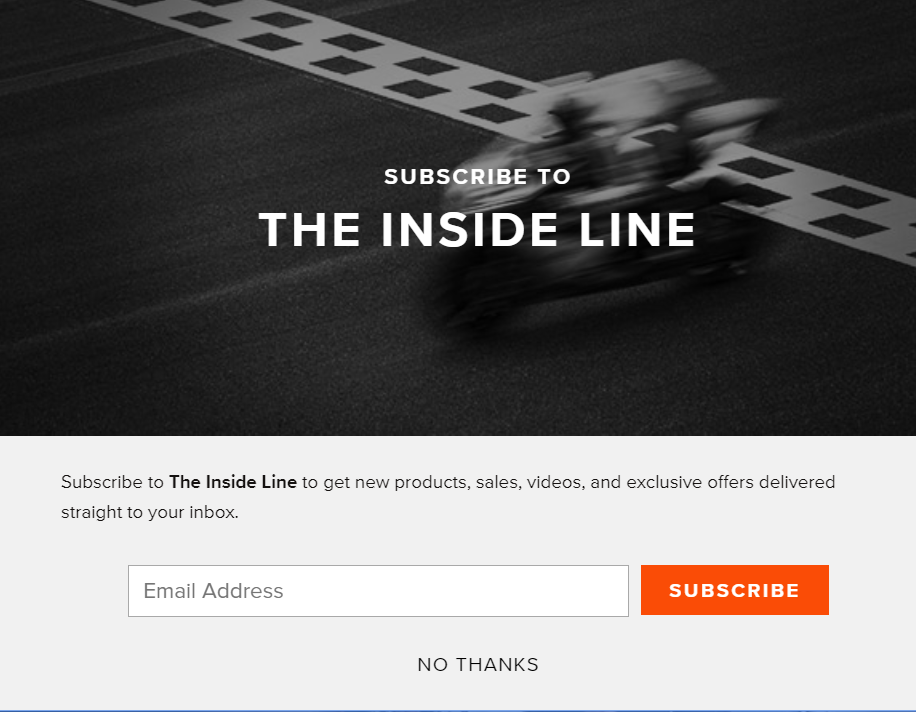
This way, if the visitor doesn’t buy, you have them in your funnel to send info and offers.
Be sure you’re using powerful email marketing software with an integrated CRM so you can create and track these campaigns.
#3. Package discounts
If your inventory allows, offer package discounts when people buy multiple items. This works particularly well when the items can be sold in a set — for example, fashion outfits or cookware sets.
The easiest way to do this is to have the product set as an individual offer people can buy and save. Have these sets feed into the recommendations on the product pages, and highlight your best deals with banners and in email campaigns.
#4. Product care packages
Make sure your packaging comes with product recommendations, coupons and referral cards. Your packaging is another chance to up-sell and cross-sell.
#5. Hire a salesperson
For some businesses, like high-end B2B sales, it makes sense to have a salesperson on staff to follow up with clients. This person can build a personal relationship with customers and establish their place in your recurring sales funnel.
If you sell large-volume B2C, phone call follow-ups are probably not practical, but it’s wise to have a customer service rep that handles your chat and any incoming communication from customers. They can also follow up with your most loyal repeat customers and make special offers exclusive to them.
In a world with infinite shopping options, one of the best ways to make sure your store stands out is customer service. Have staff on hand that ensures you’re responsive and thorough.
Pro Tip: If you develop rapport with a customer, be sure to ask them for product reviews about your store and your products.
#6: Create a loyalty program
If you want to keep customers coming back, motivate them with a loyalty program.
Create exclusive offers that go out only to your existing customers. Personalize offers so they up-sell based on previous purchases.
This ties into your sales outreach and email marketing. Make sure you’re keeping in contact with customers. It’s much easier to earn repeat sales from people who already bought from you than it is to always have to win new customers.
#7. Retargeting
In addition to email, you’ll also want to run retargeting ads.
These ads keep you in front of people who visited your site and didn’t buy. You can target them based on products they viewed or even if they abandoned their cart. For example:
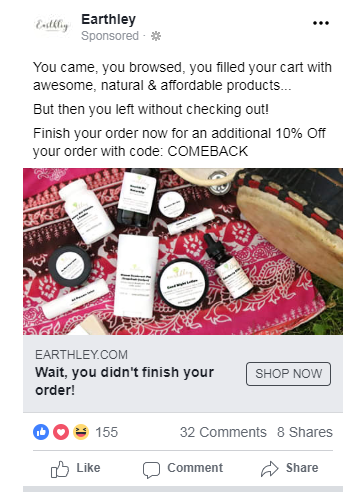
Also create retargeting lists out of customers, advertising new inventory and loyalty program deals. These types of ads are particularly effective on Facebook. Here’s an example:
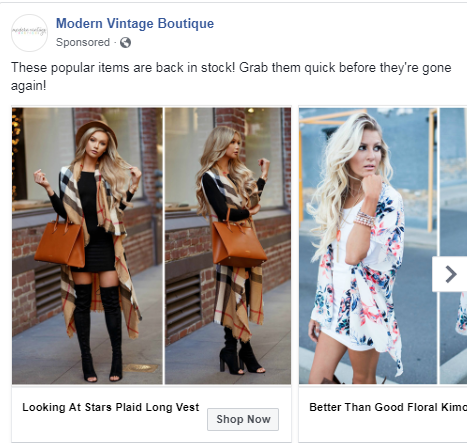
The more opportunity you have for recurring sales, the more you should retarget your customer audiences.
#8. Social media marketing
Make sure to encourage your customers to like your social media channels throughout the buying process. You might even have a loyalty program offering a discount if they follow you on Facebook or Instagram.
Social is probably the best place to keep your product lines in front of your existing customers, as we showed with the above Facebook ads. Instagram and Pinterest also work well for product image/inventory ads.
#9. Keep learning about e-commerce
Our last tip is to keep studying and learning about how to run an e-commerce website and market your products.
The online sales world changes fast. Facebook, in particular, is notorious for changing its platform, often before people have time to grasp the previous update they’re now phasing out.
Our blog is a great place to get updates on the latest. Subscribe to our YouTube channel to get the latest video tutorials.
Stay sharp to keep ahead of the competition and persistent to stay in front of customers. It may be online, but it’s still selling.
Offer great deals, hustle and you’ll do well.
Originally published on 4/10/19