3 Types of Shopping Searches

When it comes to using search engines to shop, consumers have three different starting points. When you understand these, you can structure your campaigns to fit each search intent.
Ecommerce stores target people who buy products online. Sometimes, a shopper’s search has focused buying intent. Other times, it starts with a search about a problem that leads — eventually — to a purchase.
There are three different shopping journeys represented here, and building campaigns for all three can help to maximize your online sales.
Informational search
The pain in my elbow isn’t going away. I may have a serious problem.
I go online to get some information. I’ve heard the term “tennis elbow” before, so I start with that search.
I get some information from the Mayo Clinic that describes my symptoms. This is a step in the right direction.
Only I don’t play tennis enough to develop this problem. However, they do mention that repetitive computer mouse use is a risk factor.
Bingo! I suspect that what’s causing it is sitting at the computer all day working. So I search “tennis elbow from working at a computer.”
With that search, I find several more terms, including “mouse elbow” and “computer elbow.” I search these for more info.
With these searches, I have identified myself as a possible consumer for several products, including desk elbow supports, padded mousepads and ergonomic mouses.
An e-commerce site retailing ergonomic mouses should:
- Create an informational landing page describing what “mouse elbow” is and how it can be relieved
- Optimize the page to show up organically for the varied phrases around “mouse elbow”
- Develop the content so it provides useful information to the visitor while leading them to further explore the product
- Link to a product page where the visitor could learn about the product and make a purchase
- On both the informational page and product page, include product reviews to build credibility and trust
- Run paid search ads for both this page and also directly to my product page for these search terms
- Set-up remarketing so that if they don’t buy at first, my site stays top-of-mind as they continue to feel pain while sitting at their computer
At this time, I’m a hot buying lead for anyone selling ergonomic mouses. There are a number of blogs with information on this problem and these products, but (as of this writing) only one that’s from an eCommerce site that does a good job of connecting the information to their products.
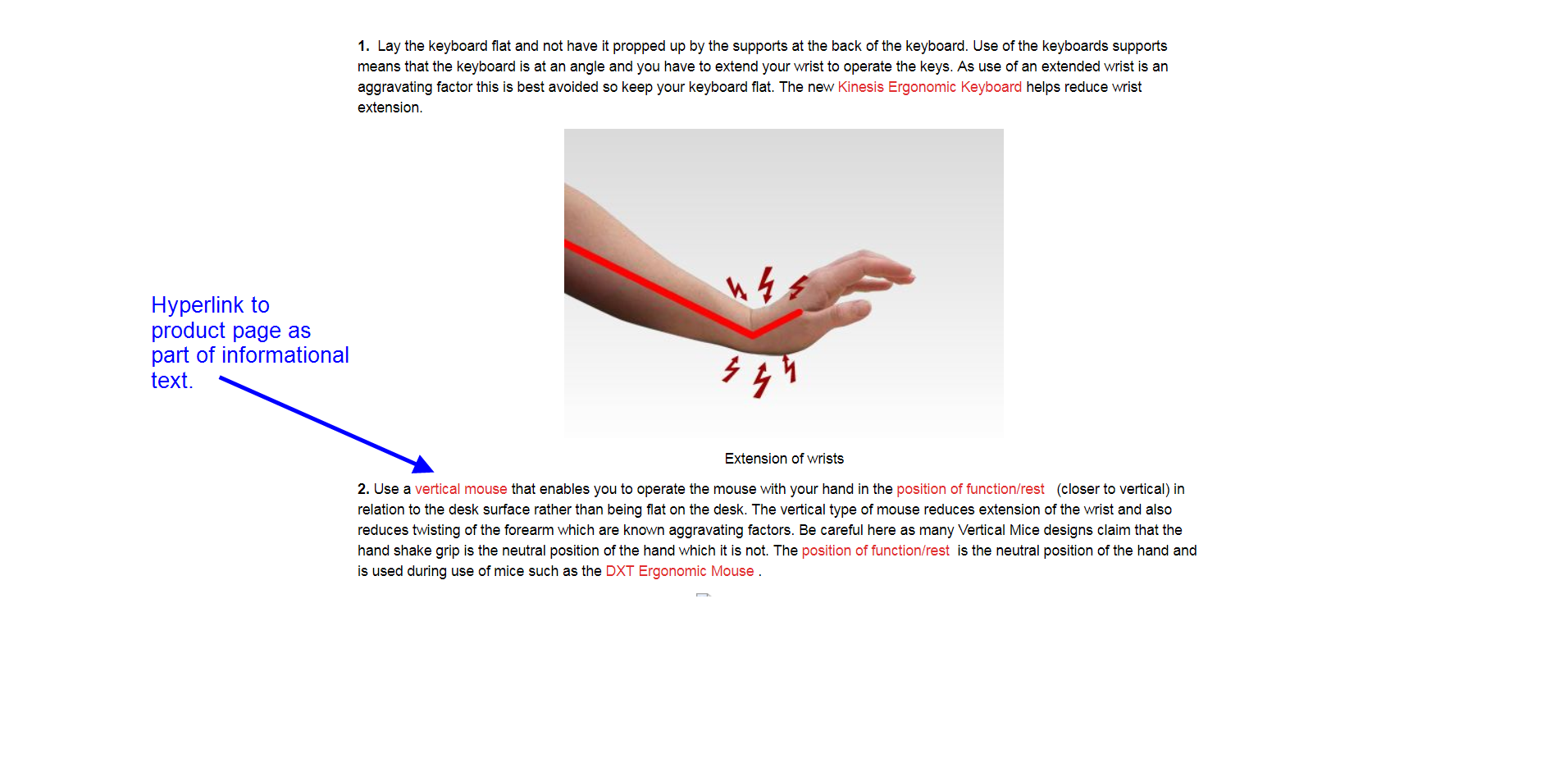
I’m likely to check out some online reviews to see what looks the best. This will influence my buying decision. If I’m a retailer, I also want to optimize content for “ergonomic mouse reviews.” I’d probably create an additional informational landing page with details on how to choose this type of mouse, including links to my products reviews and product page.
It’s vital to note that the original intent of this search was to find information about a problem. Effective e-commerce sites use these informational searches to provide answers while introducing their products as a solution.
Transactional search
I’ve decided it’s time to start cooking more stir-fry at home. I want to buy a wok.
I’ve looked around at a few woks before, and one thing I know is that I need a wok that will work well on the glass stovetop in my kitchen.
I search for “best woks for glass top stoves.” The results of this search put products front and center:
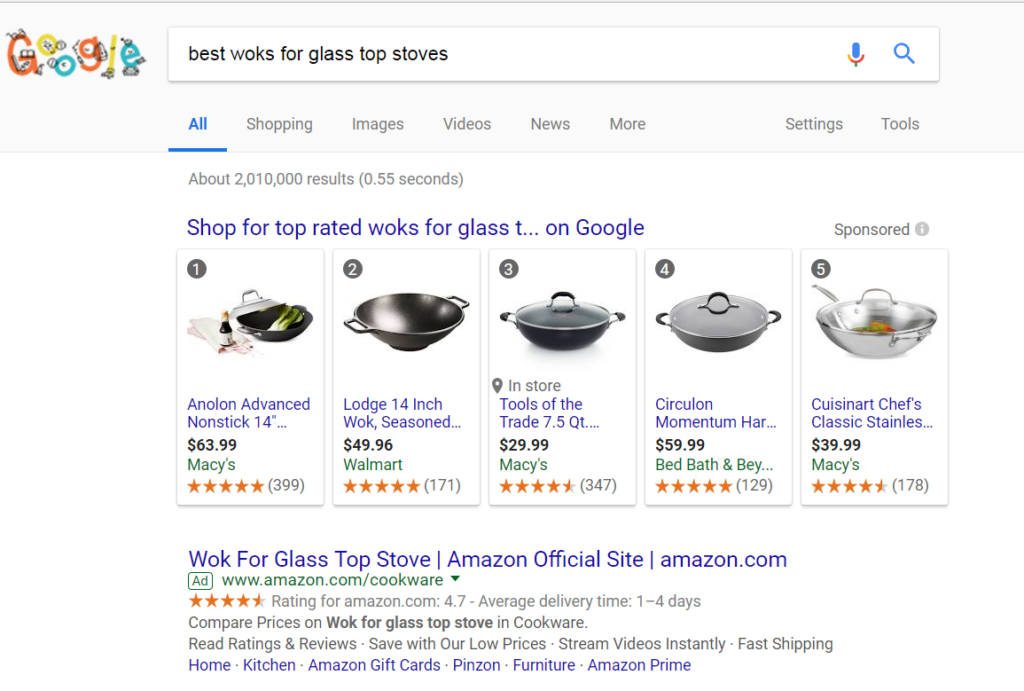
This is a transactional search. The search engines provide content that is meant to provide me with product options to buy.
For the online retailer, this means that paid advertising on Google Shopping and possibly on Amazon are necessary tactics. Because I’m looking for a particular type of product, it suggests a much stronger buying intent that the informational search.
However, it’s also worth noting that in the organic results, there is information on how to choose woks, with several articles that specifically address wok cooking on glass stovetops.
Also, there are several articles with reviews of different types of woks.
Because I’m not totally sure what type of wok I want, I peruse these reviews to get more information.
An e-commerce site selling woks that work on glass top stoves should:
- Have well-optimized Google Shopping campaigns with competitive bids and pricing
- Have well-optimized Amazon products if they elect to sell on Amazon
- Have informational and review content that can be ranked organically (This content is meant to help provide details on the products so buyers can make the best decision. Like the informational tactic, all content should link to product pages and use retargeting ads.)
Navigational brand searches
I own a pair of Dakine ski gloves. They’ve served me well for six seasons, but they’re finally starting to wear out.
It’s time to replace them, and because I trust this brand, I want another pair from them. I do a search for “Dakine ski gloves.”
Not surprisingly, the top results (both paid and organic), are the brand website. I click on there to check out this year’s gloves.
This is a navigational search. I know the brand name, and I search for it specifically.
I look through their site and find the glove I think I want. It’s called the “Scout.”
But I’m an online shopper. I want to get the best deal. So I search for “Dakine Scout ski gloves on sale.”
Google Shopping provides me the best chance to compare prices. I also check Amazon and an organic result from Backcountry.com, which is a site I’ve bought from before.
Several things will come into play. I want the best price, but I’m also likely to buy from a larger retailer I trust, which may include Amazon.
With this specific product search, my buying intent is strong.
An e-commerce retailer selling this glove should:
- Optimize their Google shopping with a particular focus on having competitive pricing and shipping options
- Optimize on Amazon, again with a focus on pricing
- Optimize their website product page to make sure it ranks organically
Know the shopper’s intent
It’s important for you to structure your campaigns around these three basic search intents — because that’s how Google structures its results.
Google is most concerned with matching the content it provides to the searcher’s intent. If the algorithm determines the searcher wants more information, it will provide articles that favor organic results.
If the search intent is transactional, then it provides products on Google Shopping, and will likely mix product pages/categories with reviews and other information in organic results.
If the search is navigational for a brand, that narrows the parameters for search results and gives a clear advantage to the actual brand website.
However, shopper behavior for a particular brand’s product will often be influenced by price comparisons, which gives certain sites an advantage if they can sell the same item at the lowest cost.
If you’re looking for competitive advantage and the opportunity to engage new shoppers, work more on your informational search, which can include producing videos.
At this time, one of the best opportunities is providing product reviews. Many of these searches are dominated by independent blogs that monetize clicks off the site (meaning they don’t sell the product, but rather use Adsense to get paid for clicks that go to e-commerce sites).
Often, these blogs are fairly amateur in both design and writing. An e-commerce site that creates a strong informational page with reviews and buying tips could find a lot of low-hanging SEO fruit.
Originally published on 5/21/18