Your Brand Advertising Message is Your Why
Compare the following brands with their slogan/tagline.


The first brand, Wild Zora, tells what they do. They make a meat and veggie snack bar.
The second brand, Talon, tells how they do it. Creating an evolution in guitar picks.
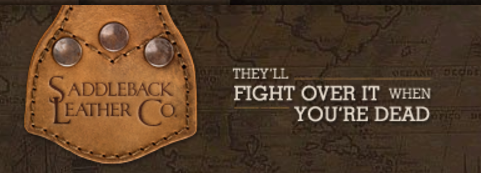
The third, Saddleback Leather, tells why they do it. So durable and valued, your progeny will fight over it when you’re dead.
If you want your brand messaging to be effective, consider Saddleback Leather. Tell why you do what you do.
People Buy Why
We’ve frequently referenced Simon Sinek’s now famous Ted Talk entitled Start With Why. Watch it (again if it’s been awhile).
When you want to create an overarching brand message to use as slogan or tagline – which also becomes a theme for your brand storytelling – remember his mantra:
“People don’t buy what you do, they buy why you do it.”
As Simon tells us, every organization on Earth knows what they do. A brand concept that communicates what you do only states an obvious fact that does nothing to stir our feelings. The result is unmemorable.
In fact, Wild Zora discovered that when they tell people what they do – sell a “meat and veggie bar” – people are still confused. They don’t really get what a meat bar is, much less why they should care.
In most cases, what you do should be more or less self-evident. You need to include these details for clarity, but don’t expect what you do – alone – to motivate anyone to buy from you.
How you do what you do is important when you develop your unique value proposition. It’s the actual value you offer and the reason a customer should pick you over your competition.
Talon Guitar Picks has a lot of detail on the features and benefits of their product. They have text like “4 unique models with increasingly angled Jazz style tips for ultimate string response and ideal contact” and “Craft molded with a natural thumb contour & raised grips, eliminate pick slipping and repositioning.”
Yet despite all this detail about a product that’s designed to play music, it’s only deep into their text that we start to get a glimmer of why, “As you ascend through each model…you will hear and feel how the design will reveal new tones, tighten sonics, and unleash picking techniques.”
There can only be one reason why someone would choose this guitar pick – because it makes them a better player. It enhances their love of the guitar. But this why is barely communicated.
How is totally necessary for convincing people to buy from you. It’s how the methodical buyer in all of us will justify choosing you. But it’s not the ultimate connection that makes an effective brand message.
When we read Saddleback Leather’s brand message, we get why they do what they do. They believe that a backpack or bag is so vital that it becomes a trusted, life-long friend.
Saddleback believes in life-long travel. They believe it changes everyone for the better. That travel is a transformative form of education.
They believe their bags are a vital tool for that journey. They believe a vessel for carrying essentials through life’s journey can become a family heirloom:

Notice an important word here: believe.
When you focus on the why of your business, you uncover what you really believe. When your brand message connects what you believe to what your audience believes, you have a message that resonates and motivates.
Tips on Finding Your Why
A lot of businesses fail to find their why – understandably.
It’s far more difficult to uncover and articulate than your how or what.
As we said, what is easy. Every business knows what they do. That’s why most branding gets stuck there.
How you do it and how it benefits your customers requires you to step away from the features of your product and focus on the benefits they deliver. This helps you create a value proposition that states why your offer is beneficial and the best choice.
But why you do what you do is more abstract. Simon’s example of TIVO illustrates this.
“If you’re the kind of person who likes to have total control over every aspect of your life, boy do we have a product for you.”
This idea is an abstraction that doesn’t even have a direct connection to the product. It’s not about the product. It’s about the kind of person who will love the product.
Why you offer your product is based on a belief system that connects people. The message emerges from lifestyles, emotions, desires, and aspirations. It goes beyond what we need or want. It’s what we dream of.
What does Wild Zora believe? A look at their content suggests they believe in providing a healthy snack that’s more about substance and nutrition than following trends. They believe in providing a meat snack almost anyone can eat, including people with food allergies or dietary restrictions. They believe modern life keeps us on the move, but that doesn’t mean we can’t snack on the same types of food we’d eat when we have time to cook a healthy, well-balanced dinner.
Wild Zora, Real Food for Real Life.
What does Talon Guitar Pics believe? They believe that traditional guitar pics limit the nuances of sound a musician can create. They believe every guitar player has the potential to channel their own unique delivery. They believe in the power of music and how it can give our souls flight.
Talon Guitar Pics, Find Your Finest Sound.
These are just a couple of quickly thought out tagline examples, but they make the important effort at getting at the business’ why. They’re abstractions that connect to people’s beliefs.
Give Your Brand a Theme
The beauty of having an abstract, why-focused brand message is that it serves as a theme to generate a cohesive brand story told through all types of content. Wild Zora can’t do much on social media if all they do is focus on making a meat bar, but when they start talking about how their snacks fit into “real life”, the ideas are limitless.
Likewise, Talon has little to build on if all they do is talk about the design of their guitar pic. But if they start to feature real musicians “finding their finest sound”, they have an incredible resource for content marketing.
Take the Why Challenge
An effective brand message has emotional resonance. Its role is to get people to feel they’ve found a product they can believe in.
It’s difficult to create a truly effective brand message because you have to take an abstract concept and condense it into an extremely tight statement. It’s the biggest challenge in copywriting.
But this challenge is made easier if you have the right mindset when you start. Discover your why, and use that belief to craft your brand message.
If you’re successful, you’ll have a huge advantage over the majority of businesses who can’t escape talking about what they do.