How to do SEO That Works

People who are actively searching for your products or services on Google or Bing are some of the highest quality leads you’ll get. And best of all, when you rank high organically for those keywords, every click is free.
SEO, which stands for search engine optimization, in a nutshell, is the process of making your website and your content more visible to search engines, like Google and Bing.
When people search for keywords that are relevant to your business, you want your website to show up as high as possible in the search results. SEO can help you do that.
SEO has a reputation for being complicated. There are SEO gurus who spend hours on end researching and writing about SEO strategies and trends. There are countless theories about what does and doesn’t work when it comes to SEO.
But the good news is that SEO doesn’t have to be complicated. In fact, the basics of SEO for small businesses are actually quite simple.
The basics of SEO for small businesses
Keyword research
The first step toward increasing your organic rankings and visibility is to do research to identify your golden opportunity keywords.
A golden keyword is a keyword that drives leads, sales and success. And, identifying yours is easy. Here’s what you need to know:
Short- and long-tail keywords
Keywords come in two varieties: short-tail and long-tail.
Short-tail keywords are general, one- or two-word phrases. An example of a short-tail keyword would be “roofer.” Short-tail keywords are difficult to rank for because they’re so popular and therefore competitive.
Long-tail keywords, on the other hand, are more specific, three- or four-word phrases. An example of a long-tail keyword would be “commercial roofer in Denver.” Long-tail keywords are easier to rank for because they’re less popular and therefore less competitive.
Another great thing about long-tail keywords is that people who are searching for more specific keywords usually know what they’re looking for and are no longer in the research phase of the buying journey. That means that they’re more likely to convert.
The best golden keywords are long-tail keywords that contain the right short-tail keywords. For example, say your short-tail keyword is “roofing company.” An ideal long-term keyword to go after is “best roofing company in Denver.”
By choosing a long-tail keyword that contains a relevant short-tail keyword, you can take strides toward ranking for multiple keywords at the same time.
With the example keyword above — “best roofing company in Denver” — you can also work on ranking for “roofing company,” “roofing company in Denver” and “best roofing company” all at once.
Use Google autofill to identify golden keywords
One of the easiest ways to come up with golden keywords is to use Google’s autofill feature.
Start by typing your short-tail keyword into the Google search bar. Then, take a look at the suggestions that pop up below the search bar. These are all potential long-tail keywords that you could go after.
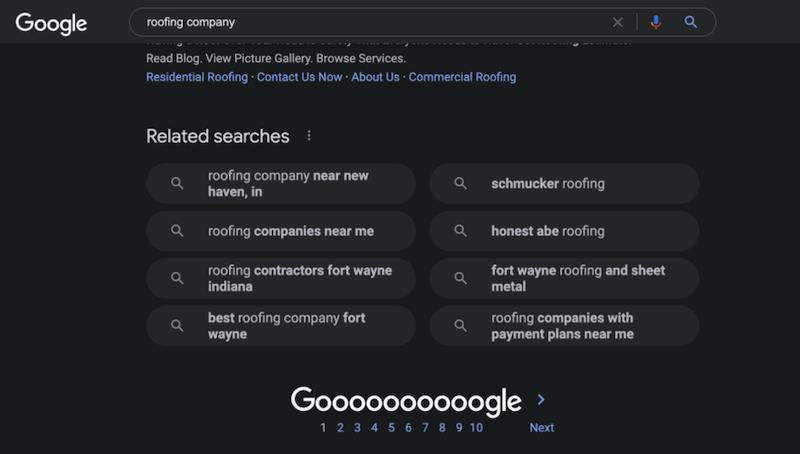
For example, when I type “roofing company” into the Google search bar, I see suggestions like “roofing companies near me,” “best roofing company Fort Wayne,” and “roofing companies with payment plans near me.”
The keywords that come up when you use Google’s autofill feature are highly searched, as the results are based on search volume. That means you can find high-quality golden keywords that people are actively looking for.
Website optimization
If you want to rank for your golden keyword, you need to optimize your website for it — specifically your homepage. The homepage is like the CEO of your website. It’s the most important page, and the most important place to include your golden keyword effectively.
There are a few key places to include your keyword on your homepage:
- Title tag – The title tag is the name of your page. It’s what appears in the tab at the top of your browser when you’re on a website.
- Meta description – A meta description is a brief description of a page that appears below the title tag in the search results.
- Headings (H1 and H2) – Headings are used to break up content on a page. The H1 heading is the primary heading, while H2 headings are subheadings.
- URL – Your URL is the web address of your website. It’s what comes after “www.” in the search results.
- Body content – Body content is the main text on a page.
- Alt text – Alt text is used to describe images on a website.
By including your golden keyword in these places, you’re giving your website the best chance to rank for it in the search results.
Pro tip – Identify long-tail keywords for each page of your website
While you should use your best golden keyword — i.e. “best roofing company in Denver” — as often as you can do so naturally, you can and should target other relevant long-tail keywords throughout your website.
For example, let’s say you’re optimizing a commercial roofing service page. In addition to “best roofing company in Denver,” you could also target keywords like “best commercial roofing services” and “Denver commercial roofing contractor.”
To get started, make a list of all the pages on your website. Then, create a list of long-tail keywords that would be relevant for each page.
From there, you can optimize each page of your website for the long-tail keywords that make the most sense.
Content marketing
In addition to optimizing your website, you should also create blog posts, infographics and other types of content that are relevant to your golden keyword.
When creating content, be sure to include your golden keyword throughout — in the title, in the body, in the headings and in the URL. You should also include it in the alt text of any images that you include.
Not only will this help your content rank for your golden keyword, but it will also help people find your content when they’re searching for related terms.
Write about what you know when creating content for your website, and look for ways that you can add value to your visitors by educating them or answering their questions.
Use People Also Ask to identify topics
Often, figuring out what to write about is half the battle when it comes to content marketing. But, one of the best tools at your disposal is actually Google! The People Also Ask section is the perfect place to find topics to write about.
To use People Also Ask, do a Google search for your keyword. Then, scroll down to the bottom of the search results to find the People Also Ask section.
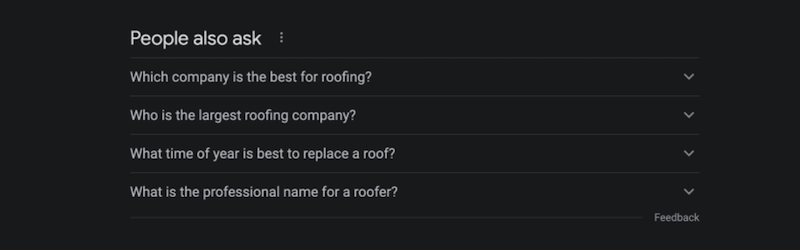
Each question that appears in this section is an opportunity for you to write a blog post or create another type of content that answers that question.
By creating content that answers questions that people are actually searching for, you’re increasing the chances that your content will be found by people who are interested in what you have to say.
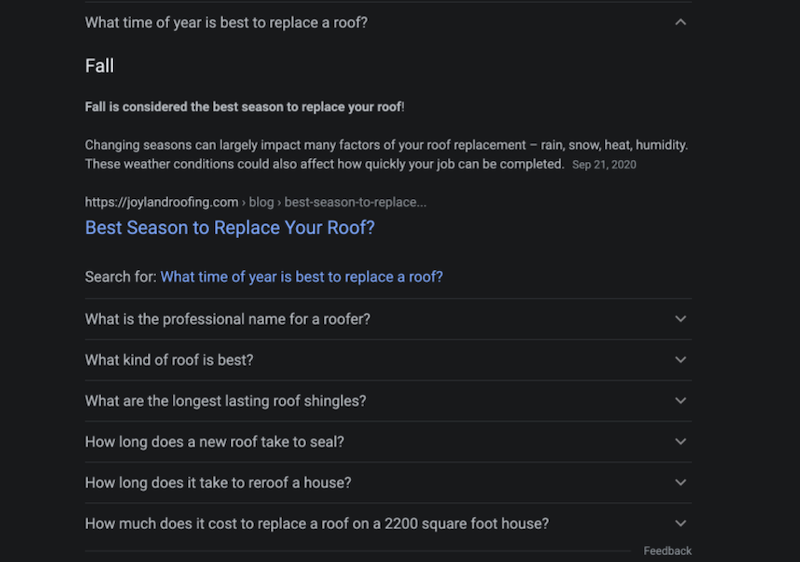
Best of all, the People Also Ask section is basically an endless resource for content marketing topics. When you open one of the questions, more questions pop up. And, the more questions you open, the more questions come up!
Maximize your reach with a blitz campaign
When you create a case study or write a blog for your website, it’s a mistake to just leave it there. Yes, you want it to be easily found by people who are searching for keywords related to your business. But, you also want to get it in front of as many eyeballs as possible.
Share your blogs across the web. Break it up in bite-size chunks or use the content to create an infographic to post on your social media profiles. Turn your blog into a script and create a video for your YouTube channel. Send out your blog in your monthly email newsletter.
The more you can get your content out there, the more people will see it. Plus, you’ll also be able to build high-quality links that point back to your blog and your website.
Pro tip – Work with a Content Marketing Specialist
Content marketing is a critical part of organic visibility, but it won’t happen overnight. It takes time and consistency to increase your organic rankings, and those are two things a lot of small business owners don’t have in abundance.
That’s where a Marketing 360® Content Marketing Specialist comes in. A Content Marketing Specialist can help you develop a content strategy that’s tailored to your business and your goals.
They can also help you with the actual creation of your content, whether it’s blog posts, infographics, social posts or anything else. If you don’t have the time or the expertise to do it yourself, working with a Content Marketing Specialist can be a lifesaver.
By following these tips, you can improve your SEO and get your small business website ranking higher in search results. But, more importantly, you’ll be able to attract more visitors to your website and generate more leads for your business.
Not only can Marketing 360’s Content Marketing Specialists help you create content that drives results, but we also have the tools you need to monitor and maximize your organic performance.
The Marketing 360 Content app helps you keep track of the organic KPIs (key performance indicators) that matter most, like keywords ranking, page impressions and clicks, organic traffic and goal completions, average CTR (click-through) rate and beyond.
The Marketing 360 platform also provides you with an easy way to post your content on social media and track how well it performs. With the help of a Content Marketing Specialist and the right tools, you can take your SEO and content marketing to the next level.