Could You Sell to Mr. Spock?
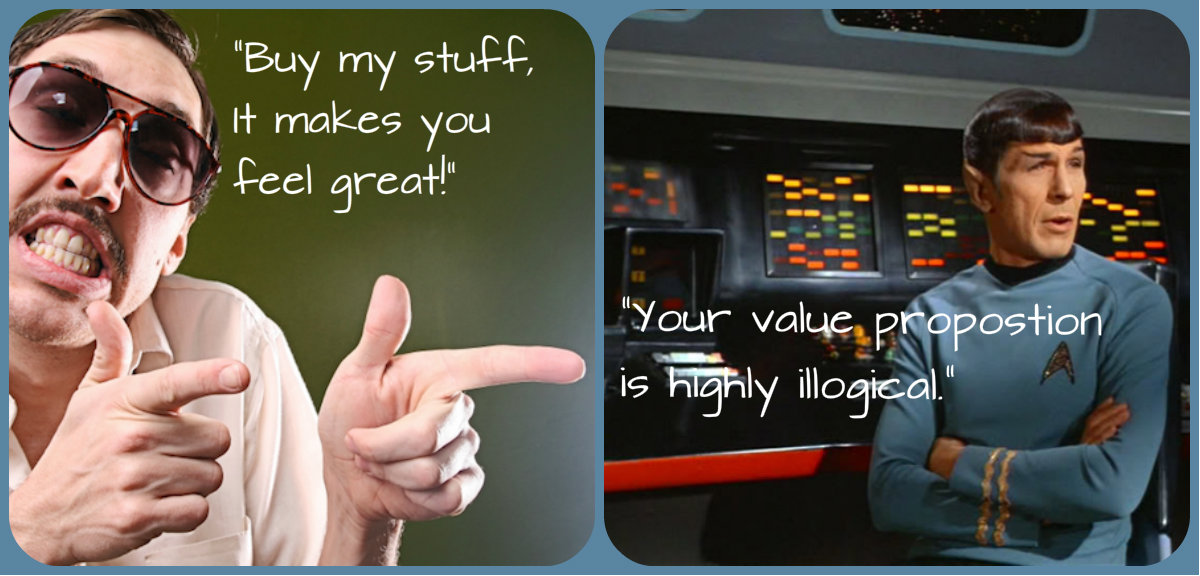
People buy on emotions.
This is a sales axiom. In practice, it boils down to:
- Ask questions to uncover the buyer’s “real” (meaning emotionally based) need.
- Present the benefits of your offer so they resonate emotionally.
You hook them and motivate the sale with an emotional appeal to drivers such as anger, exclusivity, greed, fear, guilt, love, sexual desire, adventure, salvation – just to name a few. Later, buyers justify their purchase with logic.
According to this premise, if you appeal to logic initially, you’re likely to lose the sale to overthinking and hesitation. People don’t buy the features they have to think about, they buy the benefits they feel. A mother doesn’t buy an all-wheel drive Subaru because the of the symmetrical technology. She buys it because it keeps her family safe on icy roads without turning her car into a gas guzzler.
Or does she?
It’s important to consider the buying modalities and how they connect to the strategies of selling intangible added value. Of the four buying modalities, three (spontaneous, competitive, and humanistic) are more emotionally-based. Further, “intangible” value adds are by their nature emotional.
It’s no wonder salespeople key into emotions with such focus. It’s lexical: emotions motivate.
There is, however, the fourth buying modality: methodical.
The methodical buyer is the least emotional. This is the researcher who explores features and applies logic before they make a buying decision.
Imagine trying to sell to Mr. Spock after he’s taken a few hours online researching your company, your product, and all his options. That’s today’s internet empowered, methodical buyer.
It’s arguable that because of the information resources the internet provides, today’s buyers are more methodical than ever.
Where does that leave the emotions tied to intangible value? Are they the tools of old school sales, being passed-over by better informed consumers who take more time with buying decisions?
Emotions haven’t gone anywhere – they still motivate. But what has changed is the typical approach to buying. Like Spock, we now all sit at our computers (or hold them in our hands) and research every buying decision we make. Car sales are one area where this change is evident. Buyers come to dealerships armed with information on models and pricing, all but eliminating haggling and hard sales.
At this point, it’s difficult to say that any purchases that cost more than pocket change are done spontaneously by anyone. Likewise, the hard sell that tries to manipulate buyers into a quick decision is ineffective. People know there’s always another choice.
But Vulcans we are not. We care what others think. We compare ourselves to our neighbors. We want to feel good about the products we consume.
The emotional, intangible benefits described in your sales message are still valid – but they require more support than they used to. You can’t expect to change minds just on gut feeling. Like today’s car dealerships, you have to expect buyers to come informed.
And if you helped provide the information, you start much closer to a close.
In fact you don’t have sell to Mr. Spock’s anymore than you used to. Your story can be emotionally driven (tell me you don’t want to sell everything and live Sean’s life. Logic be damned):
What you can expect is that online shoppers of all modaities will take more time in their purchase decision. They’ll consume more content at different stages of the buying cycle.
The reality is you may have more chance than ever to trigger an emotional response in your audience, but it will have to be powerful enough to overcome the inner Spock in each of us. He’ll ask more questions, make more comparisons. He’ll doubt you. He may attempt to ignore you.
Today’s salesperson is a patient storyteller. She creates a connected tapestry that stays with her audience. Overtime, she gets you to believe.
That’s the key to branding – getting buyers to believe they can live your story. Great stories move humans emotionally. We start thinking of our lives in terms of what our resources allow us to do. The more we can do what we want the happier we’ll be. Logical.
You can sell to Mr. Spock. Just make sure your theme is logical – where he lives long and prospers.
As long as he buys from you.