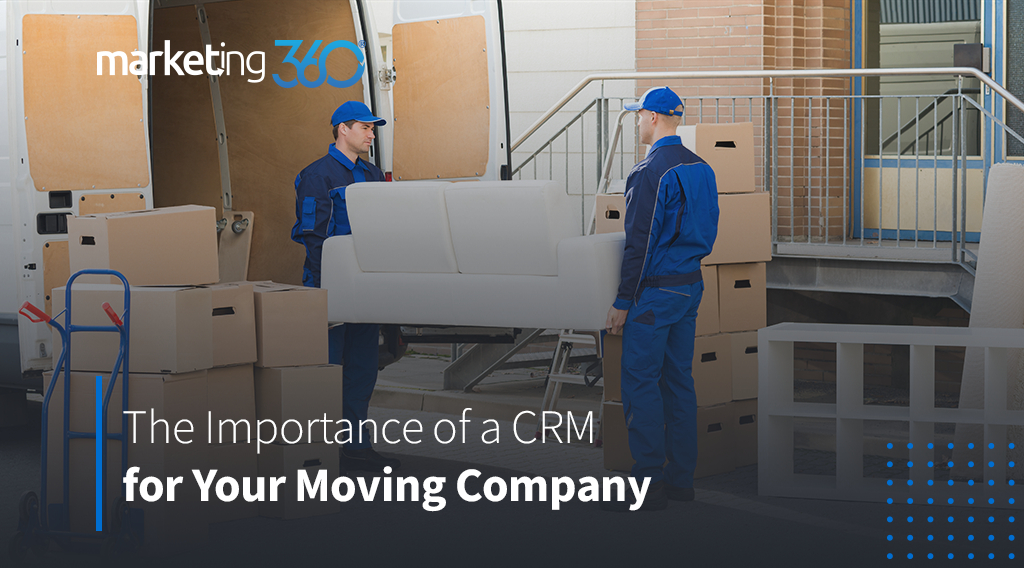
The Importance of a CRM for Your Moving Company
Running a moving company takes serious coordination, getting trucks, staff and clients aligned for smooth, stress-free moves. But without the right systems, the process can quickly become chaotic. This is where a customer relationship management (CRM) system comes into play. For any moving company aiming to grow, improve your moving company’s marketing strategies and streamline operations, a CRM is not just a nice-to-have but an essential tool.
Let’s dive into how a CRM can bring order to the organized chaos of a moving business, helping you manage everything from client inquiries to follow-ups and repeat business.
Streamline customer communication
Imagine you’ve just launched a marketing campaign and inquiries are pouring in. People want quotes, information about services and available dates. Without a CRM, keeping up can quickly become overwhelming. You might miss emails, forget to follow up or even double-book moves. A CRM prevents these issues by centralizing all customer communications, ensuring no one slips through the cracks.
With a CRM, all interactions are documented in one place. This means you’ll have a complete record of every email, phone call and text message. When someone calls asking, “Hey, I talked to someone last week about my upcoming move—can I confirm the details?” you can pull up their info with ease, building trust and showing you’re on top of things. Whether a customer is still considering your services or already scheduled, they’ll appreciate the personal touch and prompt responses.
Simplify scheduling and dispatching
Scheduling and dispatching are the lifeblood of any moving company. Trucks, movers and even equipment need to be perfectly coordinated to avoid delays or miscommunication. A CRM tailored for the moving industry can integrate with your scheduling system to make this process seamless.
For example, say you have five moves scheduled in one day across different parts of town. Your CRM can help you assign the right crew to each job, considering factors like proximity, job complexity and employee availability. Not only does this reduce errors, but it can also cut down on fuel costs and labor hours by improving route efficiency. Plus, when last-minute changes arise (which they inevitably do), a CRM lets you quickly adjust the schedule and notify all relevant parties.
Provide accurate and speedy estimates
Accurate estimates are a key factor in securing new clients. In the moving industry, clients often reach out to multiple companies for quotes before making a decision. If your company can provide a fast, clear and accurate estimate, it can set you apart from competitors.
A CRM enables you to store details about previous jobs, including distances, weight, labor hours and costs, allowing you to create estimates based on real data rather than guesswork.
Once you have an estimate in the system, the CRM can help you follow up with leads, reminding them about your services and offering additional information if they haven’t yet made a decision. This subtle nudge can make the difference in converting inquiries into booked jobs.
Improve team coordination and accountability
Effective teamwork is vital in the moving business. From the office staff taking calls to the crew members handling the heavy lifting, every team member plays a role in delivering a positive experience for the customer. A CRM fosters teamwork by creating transparency across departments, ensuring everyone is on the same page.
For instance, if a client requests specific packing instructions, the office can record these notes in the CRM, which are then accessible to the movers on the day of the job. This not only boosts accuracy but also makes clients feel heard and valued. Team members can check off completed tasks, assign follow-up actions and provide real-time updates, making accountability a natural part of your company’s workflow.
Increase customer satisfaction and loyalty
People remember the service they receive and in an industry like moving, where stress levels run high, a positive experience can lead to repeat business or valuable word-of-mouth referrals. A CRM helps you keep track of each customer’s preferences, past moves and even follow-up reminders.
Consider this scenario: A couple moves with your company and they’re pleased with the service. Six months later, they’re relocating again. Because you’ve saved their details in the CRM, reaching out with a personalized message (“We’d love to help you move again—here’s a discount as a returning customer”) shows that you value their loyalty. This not only increases the chance they’ll hire you again but also encourages them to recommend your company to friends or family.
Centralize data and insights for growth
Every interaction with a customer, whether an inquiry, a quote or a follow-up, is data that can drive business decisions. Without a CRM, valuable information is scattered in emails, spreadsheets or sticky notes, making it difficult to use this data effectively. But with a CRM, every piece of customer information is centralized and accessible.
For example, a CRM can help you identify trends in your business. Are there particular times of the year when business spikes? Do certain services, like packing assistance, get more interest than others? Are customers consistently requesting weekend moves? Analyzing these trends allows you to refine your offerings, adjust staffing levels and develop targeted marketing campaigns. Many CRM systems offer built-in analytics that can make spotting these patterns quick and intuitive.
Automate marketing efforts
Marketing a moving company often means juggling multiple strategies—from social media ads to email marketing campaigns. A CRM with built-in marketing tools can save time by automating many of these tasks, allowing you to reach potential customers without constant manual effort.
For instance, you could set up an automated email sequence for leads who have requested quotes but haven’t booked. These follow-up emails can provide helpful tips, answer common questions or offer a limited-time discount. According to research, automated emails like these can significantly boost conversion rates, helping you turn lukewarm leads into paying clients.
By segmenting customers in your CRM, perhaps by those who prefer weekend moves, families or corporate clients, you can tailor your marketing messages for specific groups, making them more relevant and compelling.
Increase operational efficiency
In the moving industry, every minute counts. Delays in communication, scheduling conflicts and misaligned staff can not only frustrate customers but also lead to increased costs. A CRM streamlines your operations, making day-to-day tasks simpler and faster.
With automated workflows, for instance, a CRM can assign tasks to team members based on their availability and role. When a new booking is made, the system can automatically notify relevant staff, book equipment and send a confirmation email to the customer. These workflows free up your team to focus on high-impact tasks, like growing the business and providing top-notch service, instead of drowning in paperwork.
Support business scalability
As your moving company grows, so do the challenges of managing more customers, staff and services. A CRM scales with you, handling an increasing volume of data without the need to reinvent your processes every time you expand. With everything organized, you can confidently take on more jobs and expand to new locations, knowing your CRM system will support the growth.
Whether you’re hiring new team members, adding more trucks or branching into additional moving services, a CRM provides the foundation for smooth, sustained growth. It enables your company to expand without losing the personal touch and efficiency that attracted customers in the first place.
Embrace the future of moving
A CRM is not just a tool, it’s a game-changer for moving companies looking to elevate their service and simplify their workflow. From providing quick estimates to ensuring customer satisfaction, a CRM keeps all the moving parts of your business running smoothly. It allows you to stay organized, streamline processes and provide a level of service that leads to repeat customers and glowing referrals.
If you’re considering a CRM for your moving company, think about the potential impact on your operations and customer experience. Investing in a CRM isn’t just about upgrading your technology or improving your marketing; it’s about giving your business the tools it needs to thrive in a competitive market. Start simplifying your operations, improving customer satisfaction and driving growth with a CRM today. Learn more and sign up for your free trial.