How Effective CRM affects Brand Presence and Brand Equity

Introduction
The average customer that any industry faces today is well informed, and their purchase decisions are influenced by a set of diverse elements.
Some of these elements include online advertisement, digital marketing, word of mouth, social media platforms, a strong influencer who advocates the brand and conventional marketing channels. This is a severe contrast to the information channels that a customer had a decade ago.
The availability of more channels means that every brand (product or service) has more options to avail when it comes to reaching out to their potential customers.
However, this also translates into a lot of white noise since each customer is being bombarded with advertisements from multiple brands. It requires considerable effort to make your brand heard.

Businesses today need to do a lot more than just develop a new product or service to cater to their target audience.
They need to work on creating a customer experience that will differentiate their product or service from the other options available to their customers. These experiences lead to a higher level of brand awareness, thereby translating into higher brand recall, increased sales and higher brand equity.
Brand presence through effective CRM
Understanding customer relationship management (CRM)
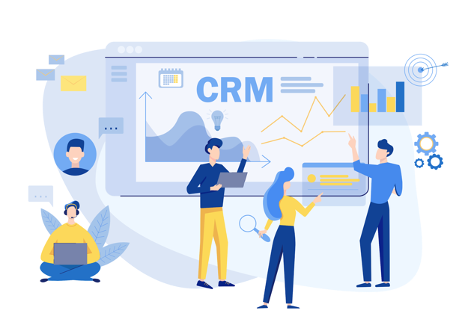
Customer relationship management forms the basis of brand trust, brand awareness, increased sales, improved brand perception and business growth. CRM is an aspect of the company strategy developed by marketers to reduce the cost of acquiring new customers and retain old customers.
CRM entails implementing an IT-based system that is aimed at understanding the behaviors and issues of customers so that they are catered to in a better way. In other words, it is a system that helps cater to customer complaints in an efficient manner and improves the quality of customer interactions with the brand.
CRM provides detailed information about the customer’s needs and requirements that allows a particular brand to develop products or services tailored to those needs. There are a few components that form the base of CRM for any business:
- Identifying and analyzing customers’ habits and behaviors
- Developing profiles of potential customers or customer groups in order to develop tailored products and services
- Work to improve the sales approach of the business
A CRM system provides a multi-channel reach to the customer by developing social media channels, targeting direct sales, email marketing and inclusion support channels, like a qualified team of call center agents to improve the response rates of customers queries or complaints.
What is productive CRM?
A business that effectively applies CRM is able to see improvements in the rate of customer satisfaction. There are specific metrics that can help you evaluate if your CRM strategy is working or not:
- There should be an increase in sales that corresponds to your CRM strategy. A good way of measuring this difference is to compare it to the historical trend of sales
- Positive experiences for the customer would translate into higher customer satisfaction levels and a better reputation for your brand
- Higher value generation from existing customers of the business owing to increased efficiency and reduction in the cost of sales
- Improved social media standing due to targeted branding strategy
- Higher levels of profitability for the business due to the adoption of best practices to cater to the needs of its customer
To ensure the CRM system works for you, it should be tailored to your business’s requirements. Every brand has different needs when it comes to catering to the needs of their customer and will require a different type of customer relationship management system. There are three main options available to choose from:
- Outsourcing Customer Relationship Management system: This involves a third-party service provider that develops the system based on your needs. This is a cost-saving measure, especially if your business does not have a team with the necessary skill set or content to develop this in-house
- Generic Customer Relationship Management system: This is the cheapest option available to any business. This type of customer relationship management system has been developed by software companies and is readily available in the market. The drawback of this option is the severe lack of customization to the distinct needs of the business
- Custom-developed Customer Relationship system: This is a pricey option, but it is tailored to the business’s distinct needs. This also takes a longer time to develop and implement than the other options.
Once the type of CRM implementation strategy has been selected, there are certain steps that need to be followed to ensure the creation of a perfect brand experience and unparalleled customer experience:
- Gather the required data: This will comprise content from social channels, any relevant company website, a customer demographic analysis report or the internet in general
- Organizing obtained information: This would entail categorizing and storing information as per the need of the sales team or the overall company
- Providing access to information: Allowing different departments across the company to access this information pool and use it to improve customer experiences
- Analysis of the information: Techniques, like data mining, are used to see customer behavior trends and patterns. Identifying these patterns helps develop products and services suited to the customer’s buying patterns
- Develop marketing decisions based on the analysis: The customer behavior patterns identified in the prior step should form the basis of marketing decisions for every business
- Improved customer relationships: Once the customers start to be impacted by the promotion efforts of the brand on social media, digital media and conventional media, it results in improved customer relationships and higher customer retention rates. Not every business is able to make a breakthrough; only those who get past their teething phase systematically implement the CRM to increase brand awareness and customer loyalty
How are effective CRM and strong BP linked?

Your brand’s standing is how strongly your brand is placed in consumers’ minds relative to the competition. This would look at the brand’s reputation across conventional marketing channels, social media standing, brand recognition by the employees and overall business success.
How well a business establishes its brand is a direct result of the effectiveness with which it has implemented its CRM plan. Every aspect of CRM leads to the advertising efforts across channels, like social platforms, to ensure a recall of the brand name among the target audience.
They can see measurable results of their social media efforts, and there is a significant improvement in customer relationships.
It is the marketing department’s discretion about the channels they want to use to optimize brand awareness. They can adopt a single or multi-channel plan to reach their customers and then improve customer service provided by their brand.
Some elements they might consider to satisfy their customers are:
- The use of content marketing to improve organic search results
- Use social media presence for promoting interactive content by the brand (Instagram stories by Sephora)
- Undertaking trainings to improve customer support and provision of better customer service
- Conducting a survey by asking the customers directly about their expectations from the brand and how they would see your company compared to other similar businesses
- Allowing for multiple payment mediums, like a credit card or Paypal, to provide increased customer support
- It is conducting internal marketing by evaluating employee satisfaction and working with other departments to cater to the employees’ needs. There is no person better reflective of a company’s reputation than an employee
- Investing in PR to enhance the reputation of your brand in the market
Every effort made by a brand to please its customers is a step towards increased brand awareness and higher brand equity. Businesses need to understand that they are operating when they must use tools, like Google Keyword analytics, to cement themselves in the minds of people.
The relative positioning of a brand in people’s minds leads to higher levels of brand awareness. How people see a brand and how well they remember it is an integral factor in developing a reputation for it in their minds.
Conclusion
Businesses today have numerous tools at their disposal to identify their target market and appropriately cater to their needs. They should prioritize their customers if they are looking to grow and be profitable in the long run.
One of the most foolproof ways to improve brand recall and reputation is a well developed CRM. A brand may use the analysis from their CRM to work on better content, provide better customer support or overhaul after-sales service to improve their standing relative to the competition.
About the author

With over fifteen years of experience implementing data-driven marketing and sales tactics, Dave Martin is routinely sought out for his ability to scale companies with growth hacking and inbound marketing protocols. Dave is obsessed with understanding what makes each organization unique and uncovering their specific obstacles to growth. As a winner of the “40 Under 40” award, Dave holds an MBA from a top-45 business school and was a featured speaker on Google Advertising at SXSW (South By Southwest), the nation’s largest interactive conference.