Dynamic vs Static SEO (This is How You Target the Best Keywords & Get More Valuable Organic Traffic)

Is keyword research and website optimization a project or a process? What’s the most effective way to gain high rankings for competitive keywords, then keep them for years? Here are some tips on how to develop a dynamic SEO strategy.
Search engine optimization involves human language. When people make a search query, they use words that make sense at that moment. They don’t think about an algorithm or a business; they use natural language that connects to their need.
When you think of SEO this way, you can see that it’s dynamic and – to a degree – unpredictable. When we start a business website, we look at the offering and select keywords sets we believe people will search for. Then we do keyword research to get estimates of how often certain phrases are used. We optimize the website and keep those targets in mind as we create more content and build links.
But keyword research and SEO are not set-and-forget.
To get the most out of your organic search results, the project must turn into a dynamic process. You use data on what you’re ranking for and what people actually search on to refine your keyword lists with terms you might not have considered in your original research.
This process is where the data you get from Marketing 360® really pays-off. Let’s break down some important metrics from the Natural Listings Ads® program.
Keywords Ranking Tracker
SEO is not exact. You don’t just rank for the exact keywords you target.
In fact, over time you’ll begin to rank for many unexpected keywords. Within these lists you can uncover new opportunities.
The Marketing 360® keyword ranking report shows a list of all the keywords your site ranks in the top 100 spots for. This list often grows into the thousands.
For example, our domain marketing360.com currently ranks on page one (spots 1-10) for 1803 keyword phrases:

This data shows how adding content to a website over time increases the ranking for a variety of keyword phrases, both intentionally targeted and naturally.
Now, I can begin to analyze these phrases based on my keyword targets. For example, one of our main seed terms is “software”. When I search on that within the rankings report, I can see what phrases we’re getting impressions for and where we rank.
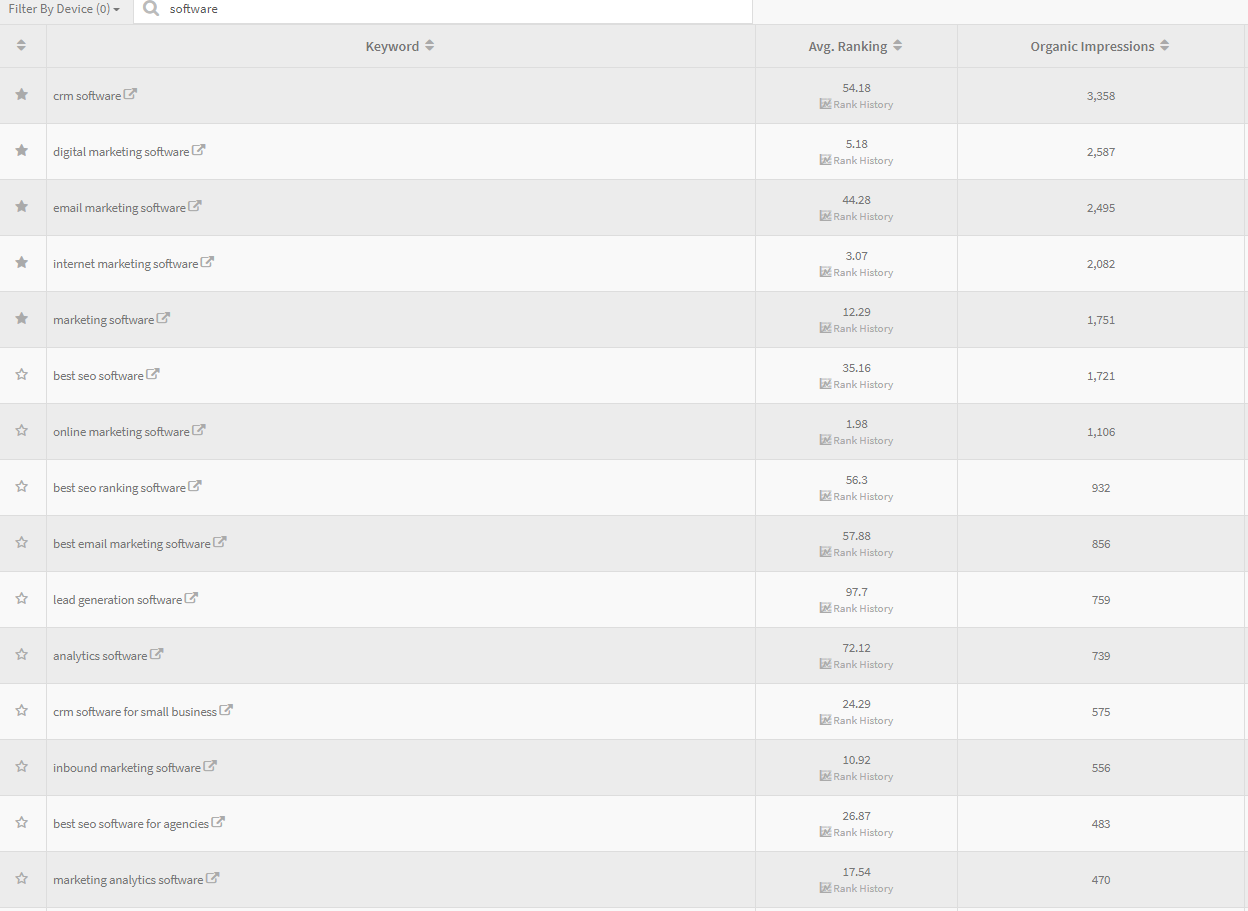
From this data, I can see we’re gaining ranking and impressions on “CRM software”. This is a prime lead generation keyword term, so we’ll want target this term and all its variations. We do well with “online marketing software”, and “internet marketing software”, so I want to continue to build content around those keyword phrases.
To take the dynamic process further, I drill down on “CRM” and see all the terms we’re getting impressions for on that topic.
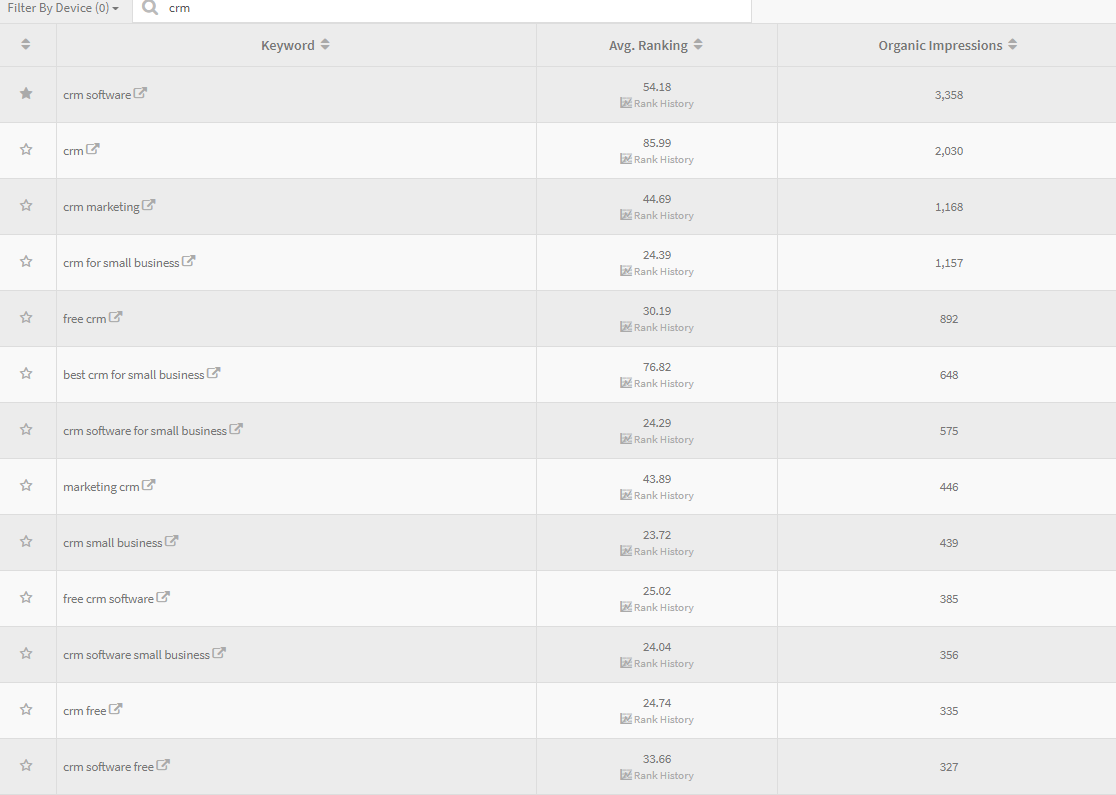
This data is an example of what we mean by “dynamic” SEO. We can select strong terms like “crm for small business” and build content around that phrase, knowing that Google is already seeing our site as relevant for it. “CRM software” itself is a viable target that would draw in a lot of valuable traffic.
This data also shows how SEO is not just about targeting a handful of keyword phrases. Consider that on our website, the top 10 terms for organic impressions totaled about 47K in the last month, and the top 10 in terms of clicks totaled 2700.
However, these are the total traffic numbers:

The top 10 keywords are only a fraction of impressions, clicks, and conversions we get overall. The list extends into all the keyword variations we can analyze and target.
Also, we can look at the actual terms people used, both organically and paid, to get more insight into what keywords people are using and what ads they’re responding to.
For example, these are the top paid keywords driving traffic the last month:
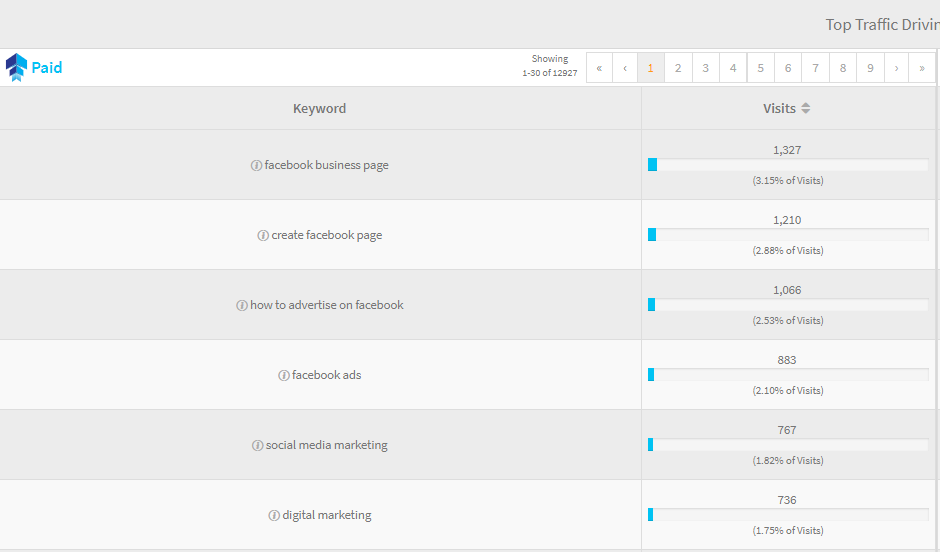
Based on this data, I can see that content around Facebook business pages and advertising are popular. I already know we rank on page one for “social media management company”, so content around social media marketing and specifically Facebook business pages look like they’d make a good organic campaign.
Data is what drives dynamic SEO campaigns. The search algorithms don’t just rank a website for a few main keyword targets anymore. Instead, Google wants to offer the most specific, relevant content for every individual search query.
In fact, the artificial intelligence (AI) part of the program (called RankBrain) doesn’t just consider the actual words used in the query. Instead, it seeks to understand the intent behind the search. This is a reason websites rank and get impressions for so many keyword variations.
You can use the NLA® data on Marketing 360® to better understand the search intent of your potential customers, then create content that matches that intent. Meeting those needs is the ultimate goal of dynamic SEO work.
Here’s a review of this topic in a recent Marketing 360® webinar.