A Shopper’s Journey (This is How Much Research Your Customers Are Doing Before They Buy)
You sell things, so you’re always looking to understand why people buy. Buy – use their money to get your product. Here’s a journal of a recent shopping journey of mine. What I describe are behaviors that are common with digitally empowered consumers.
The product I’m shopping for is a skier/snowboarder specific backpack.
I both ski and snowboard at a resort (Loveland Ski Area, CO) that has high elevation, off-piste terrain. I’d like to be able to carry my goggles or glasses, water and some layers.
But these are inbound runs with avalanche control. It’s not backcountry, so I don’t need a pack to carry shovels, probes, etc.
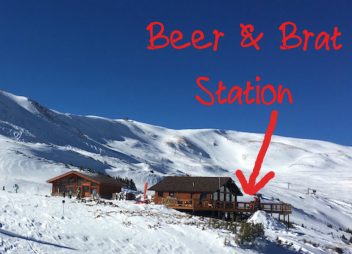
In fact, I’m really motivated to get a pack because Loveland has a number of cabins with stoves that make great break spots. All of these have decks with grills guests can use.
So, I also need this backpack to carry brats and beer. Grilling and chilling a crisp spring day is part of the experience not to be missed.
As a shopper, I have very specific needs in mind. Here are my shopping steps.
Step One: Product Introduction
I became aware of this type of product by seeing it used at Loveland.
When I started seeing people with backpacks, I actually thought it was a bad idea. My fears were that it would affect my riding by moving too much on my back and that they’re cumbersome on the lift.
I’d seen a guy flail with his backpack getting on a lift. Then a story came about a fella that literally got hung up on a lift at A-Basin Ski Area:
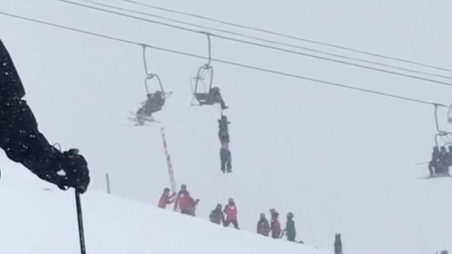
After a heroic rescue all was fine, but this scared me away from buying a pack all of last season.
Then, yesterday, I went snowboarding. Put a can of IPA beer in my pocket for a mid-day swig. Except it blew up as I rode, soaking my coat and pants in bittersweet beer (both feeling and smelling).
As I sat by a stove drying my stuff, I lamented out loud about my poor beer. Another guy heard me and said this was unjust. I agreed.
Then he pulled a couple of beers out of his snowboarder’s backpack – one, he said, with my name on it.
I thanked him for the beer (and his good karma) and enjoyed the beer. Without thinking about it, I was staring at his backpack.
Didn’t take long for me to decide I needed to look at this product again.
If I can find just the right one.
Step 2: Product Research
We’re out for lunch and stop by a shopping center. My research starts at Dick’s, but none of their packs are ski/snowboard specific.
So I head home and search on Amazon. They have some packs, and one in particular from Dakine catches my attention. As I see more prices, I start to set a range: $50-90 should get me what I want.
Dakine also has an advantage because I have a pair of their gloves now, and I’m happy with them. I trust this brand.
I look at their company website to see all their options, and also check backcountry.com and sierratradingpost.com to see what’s there. Sierra strikes out when I search for “snowboard backpack”, so I dump them.
Backcountry has the pack, and even one with a stupid design that’s on sale for $49.99. It’s in the running.
Also, Amazon has its usual jump on the competition by getting a good option in front of me on Amazon Prime, so free shipping and easy to order.
However, I’m not ready yet. The online experience isn’t going to work here. I want to try one on to make sure it doesn’t seem like it will be uncomfortable or restricting when I ride.
I know I’m going back to ride in the next few days at Loveland, so my plan is to check the snow shop.
(I’m doing something called webrooming here. I research a product online, but want the tactile experience of handling it physically so I go to a retail store).
When I’m up there, I find they have a Dakine pack, but it’s smaller than the one I looked at on Amazon. I try it on and realize that this is more the size I actually want.
It occurs to me that if I’d stopped my research and just bought the pack I’d seen on Amazon, I would have gotten something that’s too large for my needs. This makes me glad I waited.
Still, I’m not ready. This pack is $85 at the resort shop, and I figure I can probably find it cheaper somewhere else.
Next day, I continue to browse. Another feature that’s come up is hydration systems. Camelbak brand is big on this, so I do a search and discover they have an entire line of snow specific hydration packs. However, the ones I’m most interested in are over $100 bucks, which is more than I have in mind to spend.
Another issue also pops up in my mind. That guy hanging from the lift. One thing I notice in both the Camelbak and Dakine product descriptions is that these packs are designed – at least to an extent – for backcountry skiers. They all make mention of being able to store backcountry gear like shovels or ice picks.
But I don’t have this need. I want a pack that’s designed specifically for use at a resort where I ride lifts.
I drill down by going on Google and searching for “backpack designed for riding ski lifts”.
Low and behold, on the first page of results is a product some entrepreneurs developed that has exactly my needs in mind. They even call their product the LiftRider. Their Kickstarter marketing video even mentions easy beer storage…
Now, I have an option that is designed perfectly for needs. They have an impressive pitch.
The biggest issues are at $120, it’s more than I planned to spend; and that the company is an unknown that just got started on Kickstarter, so they don’t have brand trust. If I buy this, I’ll have to take my chances on the quality and on any warranty needs.
The Decision
After bouncing around on a number of websites, reading some product reviews, and mulling over my needs, I’ve narrowed it down to three options.
The first is a Dakine 12L bag I found while searching through their products. At $70, this is both the cheapest option and the smallest pack that fits my needs (an advantage). Drawbacks is it doesn’t come with a hydration system (though I’m not convinced I want that) and it has some backcountry features I don’t care about.
(Note: I also went webrooming for the Dakine 12L bag at a local retailer. I didn’t love it. It’s actually bigger than I thought, and I didn’t like the waist strap. Ugh. I feel I’m starting to over-research this).
Next is a Camelbak ski specific bag at $110. This looks good overall for my carrying needs and is a trusted brand.
Third is the LiftRider. This is the only product I found that specifically addresses my needs, particularly with using the pack on lifts. The safety release feature looks like it was designed for someone who saw the episode at A-Basin.
If I take a chance on the LiftRider, I’ll have to buy it sight unseen. The other packs I can check out at local retailers.
I go webrooming again to check out the Camelbaks, and find they have a slightly smaller pack with a removable belt for $100. I check online for a low price and do find a few options for $85.
However, as a season pass holder at Loveland I get a 10% discount. I decide I’d like to give them the business, so I buy the pack there.
Takeaways
This shopping journey documents several important behaviors any online retailer should take into account.
- First is to note the amount of research internet empowered consumers do. I’m checking multiple vendors online, looking at an array of brands, going back and forth between online and physical stores, and price shopping. My decision making process is drawn out because there is so much information and so many options.
- I have little brand or store loyalty. I just want the right product at the right price. However, I’m inclined to buy on Amazon because it’s easy. Still, I end-up buying locally because I can get the same price on the product and I wanted to give the ski shop my business.
- There is an innovative product option available that I never would have been aware of except for online search. They made a good offer and might have gotten the sale except they were a little over my price limit.
Not every shopper’s journey is this methodical, but this level of research is not uncommon. Today, shoppers go back and forth between online and physical retail both to physically handle products and compare prices.
For many product lines, Amazon must be taken into consideration. Realize that at the very least, shoppers will compare what they can get on Amazon. You underestimate their position in the marketplace at your peril.
A new, innovative product starting on Kickstarter and optimized for search can get online researchers into their sales funnel. Serendipity also plays its part. Often, people discover products when they see other people using them rather than from the reach of an advertising campaign.
As you develop your marketing strategy, keep this shopping journey in mind. As mobile research becomes a habit, you’ll need to cover those steps to make sure your product is visible and competitive.